Events
For the First Time in Central Asia: Boston Marathon Winner Yuki Kawauchi from Japan to Toe the Almaty Marathon Starting Line
09 April04 min

Top-10 signs one should watch out for before starting or while running highlighted here for you together with Vladimir Borissov - Coach at Alay Pro Running School. In each of these tips, it is important to focus on yourself and listen to your body.
1. Feeling unwell
In case of any symptoms of being unwell, high blood pressure, headaches, do not go to the starting line. It is your body sending you the signals that you need to listen to. Otherwise, your general condition will get worse and you may end up in a hospital.
And the difference between regular worrying due to adrenaline and bad health condition may be felt when listening to the body carefully.
2. Unhealed injury
Going to the starting line injured is strictly prohibited, even during recovery process. Injuries that are common among runners include knee, tendon, and muscle injuries — excessive load and inflammatory state while running will lead to extensive treatment and recovery course, and may even result in recurring problems.
3. High body temperature
Training or running with a fever can lead to flare-ups, cardiovascular problems, headaches, and serious complications.
4. Quick start
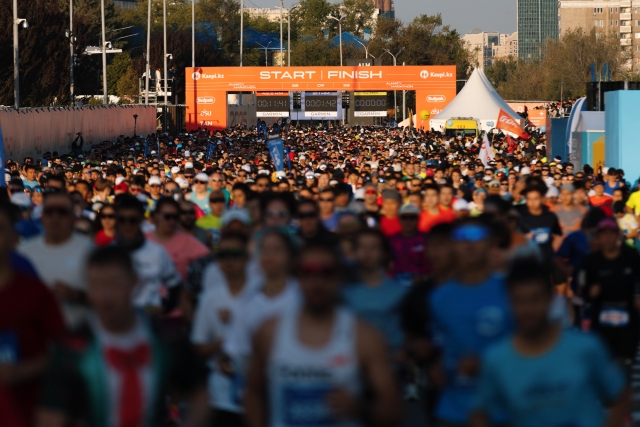
While chasing their ambitions and being impressed by the atmosphere, runners may start too quickly. It creates a huge load onto the body and individual organs. If you run a long distance and expend all your energy at the very beginning, by the middle of the race you may experience pain in the heart, stomach, or other organs — essentially, your body’s weak points will reveal themselves.
5. Lack of training
Any running race is a challenge that requires training and preparation. No preparation means no start. Sometimes people start training one month before a marathon. Such runners will suffer some cardiovascular, locomotor apparatus problems, and various injuries. If you really want to run, you should consider a short distance, but never attempt a long one right away.
6. Chronic sleep deprivation
Got too excited and did not have enough sleep the night before the start? Not a big deal — I have run like that, and everything was fine. The problems appear in case of chronic sleep deprivation, when you do not sleep well for several nights during the week before the start. Such condition makes your body weakened, the nervous system is depleted, and the most you can do is run slowly — without pushing yourself, just maintaining an easy pace.
7. Food poisoning
Do not experiment with food during the week of the race, and if you experience food poisoning — do not start. The body experiences stress, loses water and electrolytes, and becomes weakened during food poisoning or any other form of intoxication. It is better to direct all your energy toward recovery and avoid putting your body to the test.
8. Unproven gear
If, for any reason, you do not have your own running shoes before the start, consider skipping the race or dropping out if you feel discomfort. New shoes should always be tested in training and before the race, so you can adapt to them — otherwise, at best, you will end up with blisters.
Surprisingly, I have seen participants show up at races in dress shoes and completely unsuitable clothing. Running requires proper sportswear for a reason — it is the foundation of your safety and health.
9. Use of stimulants
Energy drinks before a race are a bad idea. If you take stimulating substances, your blood pressure may spike, your heart rate may increase, and you might experience stomach cramps. I also do not recommend drinking coffee on race day.
10. Chronic conditions
Before stepping onto the starting line, every participant signs a health waiver. Do not take part if you are unaware of your current physical state, have chronic illnesses, or medical contraindications to running.
There is nothing shameful about quitting a race.
If your body signals that you should quit the race or skip your morning run, listen without hesitation. There will always be more races, but we only get one body: no spare knees, no backup cardiovascular system.
There is no shame to quit a race: even professional athletes make this decision. At the Paris Olympics last year, the legendary marathoner Kipchoge withdrew mid-race. In Kazakhstan, during the national championship, my own coach pulled his athlete off the course. These are strong individuals, and their choice does not diminish their achievements — it highlights their professionalism, their ability to stop and assess a situation rationally rather than emotionally.
If you find yourself in doubt, ask the simple question: “Why am I doing this?” — and always choose health.